Warmth, cold, humidity: the proper atmosphere inside the enclosures

October 14th, 2011 | 4 Comments | Posted in Panel Building
Tags: , , ,

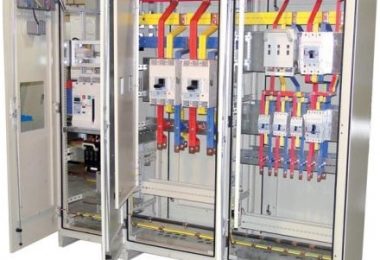
Most of the electrical panels and switchboards don’t need any thermal management for their internal atmosphere. The variation range of their internal temperature remains acceptable through the seasons and stays within the limitations imposed by the incorporated devices. However, some electrical switchboards should deal with extremely cold temperatures (technical rooms in the mountain) or with very warm or humid atmospheres (installations in Africa, in the Far East,…). Without going that far, some electrical switchboards contain a high density of power electronics devices. These electronic devices are more and more compact and generate a high level of heat dissipation. It is particularly true as examples for transformers, and for variable speed drives too. This situation is also frequent in little or big computing rooms. So, what are the solutions for electrical switchboards? Read the rest of this entry »

Join the forum discussion on this post

Missed something? Here are September main subjects.

October 7th, 2011 | Make a comment | Posted in Last month main subjects
Tags: , , , ,

This month in the community we have launched a survey about MV/LV transformer protection. We also published a blog article, about the US regulations regarding the protection of maintenance people, from the risks of Arc Flash named Arc Flash: are NFPA 70E and IEEE1584 dangerous? In the following article we will evoke some topics which have no answer in the forum and also introduce a member, Manh_hoa09 .

Read the rest of this entry »

Join the forum discussion on this post

Arc Flash: are NFPA 70E and IEEE1584 dangerous?

September 26th, 2011 | 11 Comments | Posted in Electrical Safety
Tags: , , , ,

My name is Günther Müller, I have 20 years of experience in electrical engineering, and I work for a Consultant in Germany. I currently work on the extension of the electrical installation of a site in Europe, owned by a large American industrial group.

In this context, we were asked to evaluate the risk related to Arc Flash, in compliance with standard and the calculation methodology. It was the first time I had to do this evaluation, as this is a US standard which I did not know about and which has no equivalent here.

First, we had to make the audit of the existing installation, and the dimensioning of the extension. Then, we had to make the estimation of the Arc Flash risk level for every , in order then to choose the category of PPE (Personal Protection Equipment) which electrical maintenance people should wear when operating on or near these equipments.

But now I really wonder: will this really help to protect the maintenance operators against arc flash risks?

Read the rest of this entry »

Join the forum discussion on this post

Missed something? Here are August main subjects

September 1st, 2011 | Make a comment | Posted in Last month main subjects
Tags: , , ,

In August, a debate about the IT has been launched, if you haven’t participated yet, why don’t  you share your opinion with the other members? In this article we will evoke some forum topics with no answer and introduce a member of the community, Ally Kanyonodo.

Read the rest of this entry »

Join the forum discussion on this post

IT earthing system: FOR or AGAINST?

August 22nd, 2011 | 9 Comments | Posted in Electrical distribution
Tags: , , , ,

The IT , when used properly and in the relevant electrical installations, provides numerous advantages, despite the misconceptions held against it. The main advantage is that it increases the availability of the installation. It helps reduce the risk of fires and explosions. It increases the lifespan of the electrical equipment. It also facilitates preventive maintenance and at the same time optimizes the overall maintenance costs, which means that the initial extra-costs are paid back.
  

With IT earthing system, the power supply has no point connected with earth (source: Wikipedia)

Read the rest of this entry »

Join the forum discussion on this post

Electrical engineering Community is proudly powered by WordPress
Entries (RSS) and Comments (RSS) and license Creative Commons License

webleads-tracker

Uplgrade...