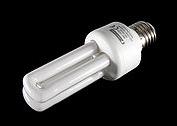
fluorescent bulbs
In the USA, if each house swapped three 60W bulbs for (CFL) also called Compact Fluorescent Lamps or fluorescent bulbs using one quarter the energy (15W), and they were used six hours per day, the saving of CO2 emission would be equivalent to putting 3,500,000 cars off the road!
Great !
But are these energy savings so outstanding ?
In fact, each household could make exactly the same energy savings by driving their cars 1.2 miles less per day.
Big deal?
Source techmind.org
I planto give you next time some facts about how green are these fluorescent bulbs (CFLs) …
Jacques Schonek
thank you for this interesting approach, i wonder what are the regulations on this subject, do the European States will taxe soon strongly the old technology bulbs in favor of the fluorescent bulbs ; do you think that the market will keep the 2 ? -may be it’s already the case –
any way, I am waiting for your next post about “how green are they” ; in my case i have some douts and would be interested to stock some old ones for my home …
The post “How green are CFLs?” is now available on this site.
Probably, the way to eliminate the incandescent lamps will be through regulations. For example changing the rules so that they will not have the CE marking anymore.
A federal mandate due to take effect starting in 2012 will begin the slow phase-out of incandescent bulbs. The choices that will remain boil down to three options:
Spiral CFL’s
Traditional Round (A-Shaped) CFL’s
LED’s
It will probably be years before LED’s reach a price that low enough to make them attractive and because they’re still quite new, there are still some bugs to be worked out. Spiral CFL’s are by far the least expensive option but they pose a serious problem when using clip-on shades that were never designed to fit them. Round CFL’s solve that problem but on average they cost about FOUR TIMES MORE than spiral CFL’s of the same wattage.
But there is a solution. It’s called the Magic Toob Lampshade Leveler and it’s designed to permanently fix the poor fit problem for about $1 per lampshade. It uses high temperature silicone tubing to cover any bulb clip and allow it to grip any shape of bulb. You can see a demonstration and find out more at http://www.magictoob.com
Jack
The Little Extra Efforts That Give You The Edge . Smallest of small saving on our exhaustible energy resources can bear us great fruits in future.
I agree with Hubbs. There are pros and cons to this discussion.
You really make it seem so easy with your presentation but I find this
matter to be actually something which I think I would never understand.
It seems too complicated and extremely broad for me. I’m looking forward for your next post, I’ll try to
get the hang of it!
You have to be careful here as the sizing isn’t consistent amongst manufacturers.
With school books, notebooks, computers, video games, cell
phones (not to mention snacks and water bottles),
all having become “must have” items. When a heavier weight than this
is placed on the shoulders, it will cause imbalance and pull
the person backwards.