Home › Electrical Engineering Forum › General Discussion › Power factor correction kvar policy in countries
- This topic has 42 replies, 12 voices, and was last updated 11 years, 1 month ago by
 Anonymous.

- AuthorPosts
- 2010/10/19 at 9:00 am #10248
 FrancoisParticipant
I want to share with you information about regulations and policies in different countries about power factor correction: are penalty levels specified, which levels ?
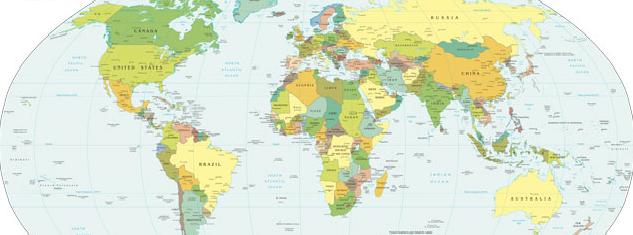
[caption id="attachment_905" align="aligncenter" width="506" caption="world kvar penalties : Germany, Austria, Canada, Spain, France, Portugal, ... ?"]
 [/caption]Most of people know the main benefits of power factor correction
- Increase the power availability or reduce the size of the electrical installation,
- reduce losses and as a consequence contribute to the reduction of CO2 emissions,
- make saving on energy bill when penalties are applied.
From my point of view, charge the reactive power in the electricity billing is the best way to push power factor correction, because it gives a fast return on investment.
I found information regarding the reactive power billing policy in some 16 countries:
Germany, Austria, Canada, Spain, France, Portugal, Baltics, Roumania, Russia, UK, USA, Thailand, China, Australiayou can have a look to this xls file and you can complete it for the countries you know by writing a Comment below … and i will then come back with an updated table
And I’m really surprised how huge is the difference between the countries and between the utilities in some countries.
Working at Schneider-Electric, i can also advise you to use the technical information given in the Electrical Installation Guide, chapter L : a good overview about power quality & power factor correction…
example of topics covered :- Why to improve the power factor?
- How to improve the power factor?
- How to decide the optimum level of compensation?
- Example of an installation before and after power factor correction
- …
Jacques Peronnet
2010/10/19 at 9:01 am #11559AnonymousGuestit is nice information about PF. thanks
2010/10/19 at 9:01 am #11560AnonymousGuestIn countries like India, where there are no charges for reactive power at consumer level, I think utilities should install those meters than can measure reactive power also. Only then consumers will try to improve the power factor of their loads.
2010/10/19 at 9:01 am #11561AnonymousGuestIn ISRAEL there is a penalty for under 0.92 for low voltage consumers and under 0.90 for hi-voltage consumers. It is checked monthly and the penalty is 0.1% (of the electric bill) for every 0.001 deviation.
2010/10/19 at 9:01 am #11562AnonymousGuestI am an Electrical Engineer in the USA and I don’t understand your Comments.
1) Electrical rates in the USA do not vary by State, they vary by a) Power company, b) and the type of consumer – for example, residential, industrial or commercial, and even within these there are several types of rates. One power company may supply power to several States or there may be several power companies in one State. Furthermore, rates often vary by the amount of power consumed, the time of day and often the season. Only very rarely are poor power factor penalties charged to residential users. Lastly, electric rates are not set by the States but by the power companies under the oversight and approval of the responsible Public Service Commission.
2) What do you mean with your $3 per KVAR comment? Actually, the most common way that power companies impose the power factor penalty is by charging for KVA-HRs used rather than KW-Hrs.
2010/10/19 at 9:01 am #11563AnonymousGuestWhy do You think that Russia don’t have a penalty? They have. I live in Ukraine and we also have a penalty. I don’t know what is the price of reactiv power in our country, but now almost every new building with power over 50kWatt has а reactive power compensation. cos phi have to be near 0.95.
Sorry for my bad english.
2010/10/19 at 9:01 am #11564AnonymousGuestI didn’t understand the concluding part of your article, could you please explain it more?
2010/10/19 at 9:01 am #11565AnonymousGuestin Mexico there is a penalty if you are under 90% of power factor, but also there olso a bonus if you are above only for industrial loads, they use this 2 formulas: total_energy_bill_PF_carge_%= (3/5)*((90/PF)-1)*100, total_energy_bill_PF_bonous_%= (1/4)*(1-(90/PF))*100
2010/11/14 at 3:05 am #11615bvcshekarParticipantpower factor improvement is done to reduce losses upstream. What if the compensating equipment consumes many times more energy than it saves upstream? Are there standards fixing the wattloss/kvar of compensating equipment?
2010/11/19 at 9:12 am #11618adminKeymasterin our country philippines, most of our power factors here is in 0.86 only..
2010/11/24 at 8:43 pm #11611andre_cirilo1ParticipantGreat information!
I am Electrical Engineer and will inform soon as occurs in Brazil demand reactive
2010/12/04 at 6:58 am #11662adminKeymasterthis information is very informative for all electrical engineer and electric lover, thank you for sharing.
2010/12/13 at 2:42 pm #11674AnonymousGuestin our country, the cos phi level is 0.98 so its almost impossible to compensation with only using 3-p capacitors, you should use also 1-p capacitors. as you may know, electric energy is getting expensive year an year and most of utulities are going to level up cos phi level their countries. so why? because reactive energy is waste as for us.
also this information is very good, thanks a lot.2010/12/13 at 2:43 pm #11675AnonymousGuestby the way, my country is Turkey :)
2010/12/24 at 5:33 am #11700liew_micParticipantI am mic from singapore.
our Power factor (cosQ) 0.85, if below than that, owner have to responsible for the electical bill.because our electrical from 22kv/6.6kv is purchase from company instead of government. in many matter to increase the power factor equal to 1.
- AuthorPosts



- You must be logged in to reply to this topic.